
1950s framing standards
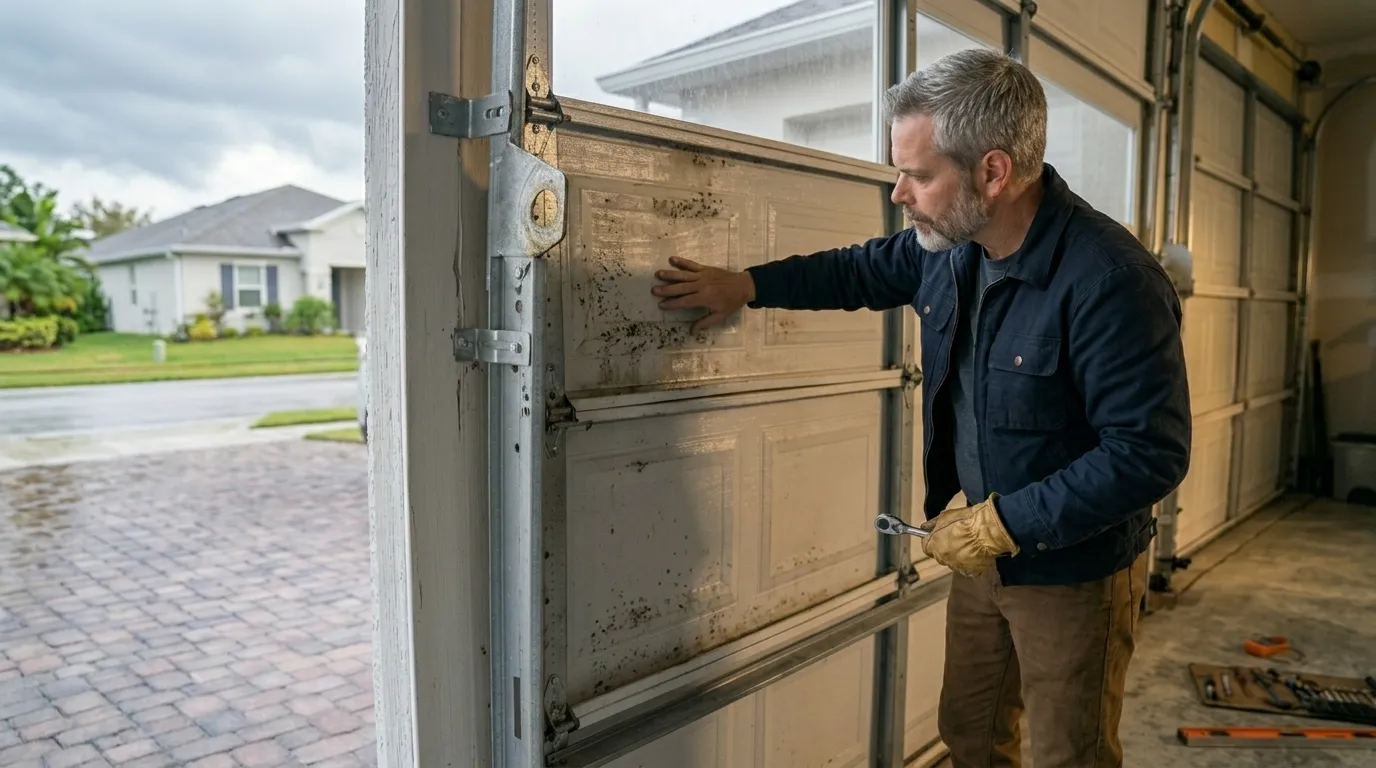
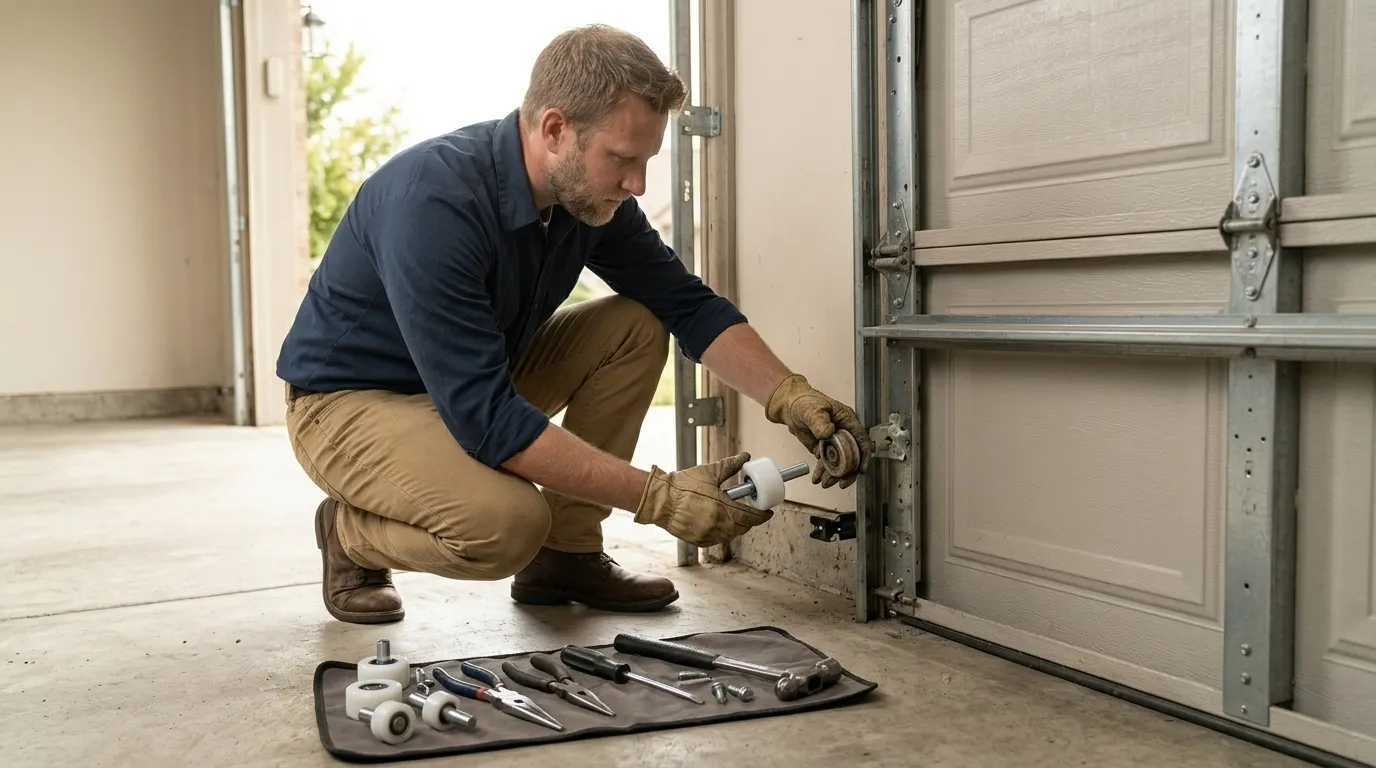
That framing wasn't built to modern spring or track specs. Can you fix a slipped cable or a door that won't budge yourself? Sometimes, if it's a loose bracket or a bent roller you can see and reach safely.
Westville, Danville
Westville homes mostly went up in the 1950s, which means original hardware nobody stocks. We drive out from Danville, 7 miles away, to fix it.
DIY or pro
Westville's houses cluster around 1954, and that year matters more than most homeowners realize when a door starts acting up. A door installed on a house built in the early-to-mid 1950s was almost certainly a one-piece tilt-up design, not the sectional roll-up doors sold today, and even where owners have swapped in a sectional door since, the original framing and header often stayed put.
That framing wasn't built to modern spring or track specs. Can you fix a slipped cable or a door that won't budge yourself? Sometimes, if it's a loose bracket or a bent roller you can see and reach safely.
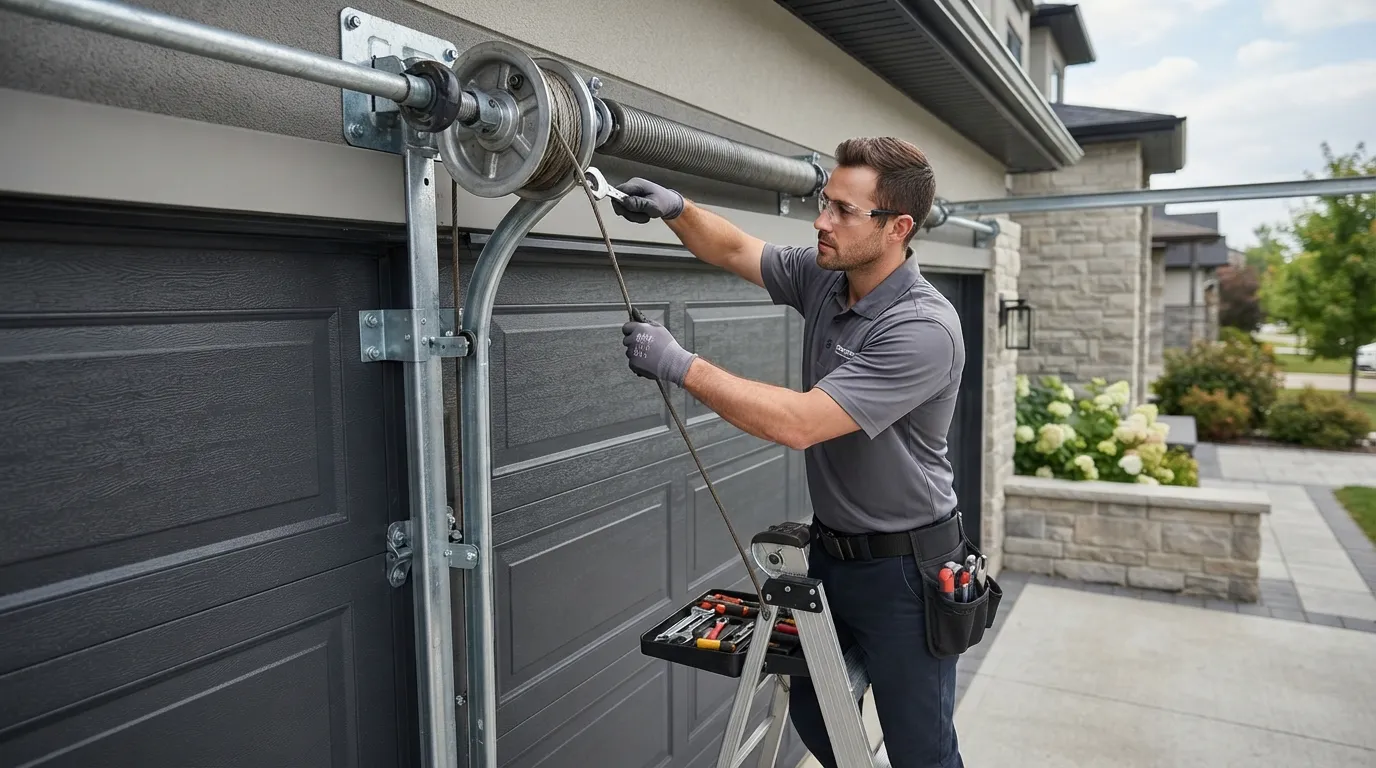
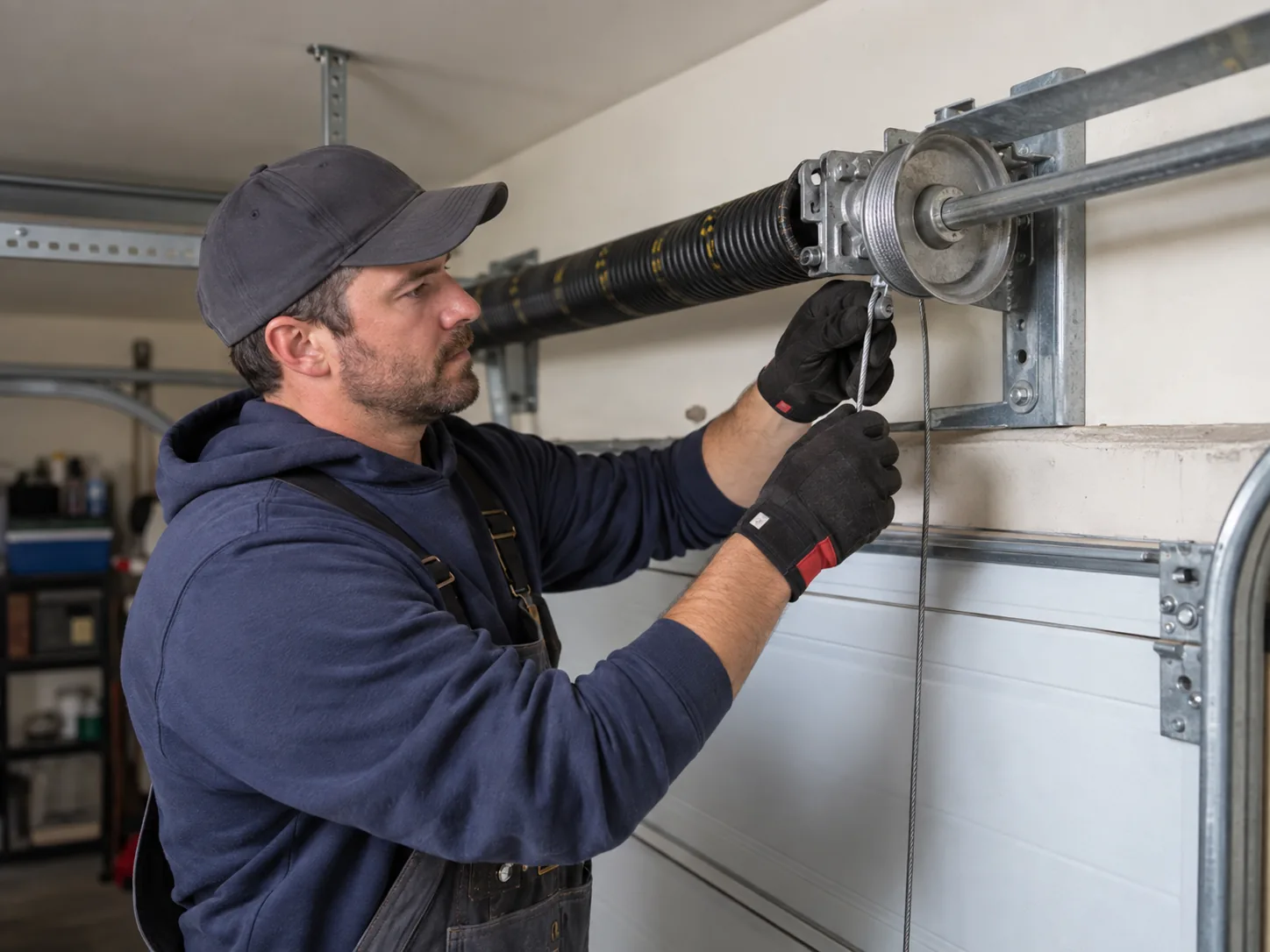
What you should not touch is a torsion spring under tension - on a door this old the spring, drum, and shaft may not match anything a hardware store carries, and the failure mode (the spring unwinding while you're holding a wrench near it) breaks bones, not just doors.
We're honest about the limit here: if the opener or track hardware is original to a 1950s install, we may need to source obsolete parts, and that can mean the job takes a return trip rather than a same-day fix. That's not a sales pitch - it's what pre-1960 hardware actually requires.
On the truck
We come out of Danville, 7 miles up the road, and we load the truck knowing what a Westville call usually means before we pull up.
With most of the housing here dating to the 1954 range, we carry torsion springs sized for the older narrower doors as well as current sizing, extension spring kits for the houses that still run them, and a stock of standard rollers and hinges that fit both old track gauges and new.
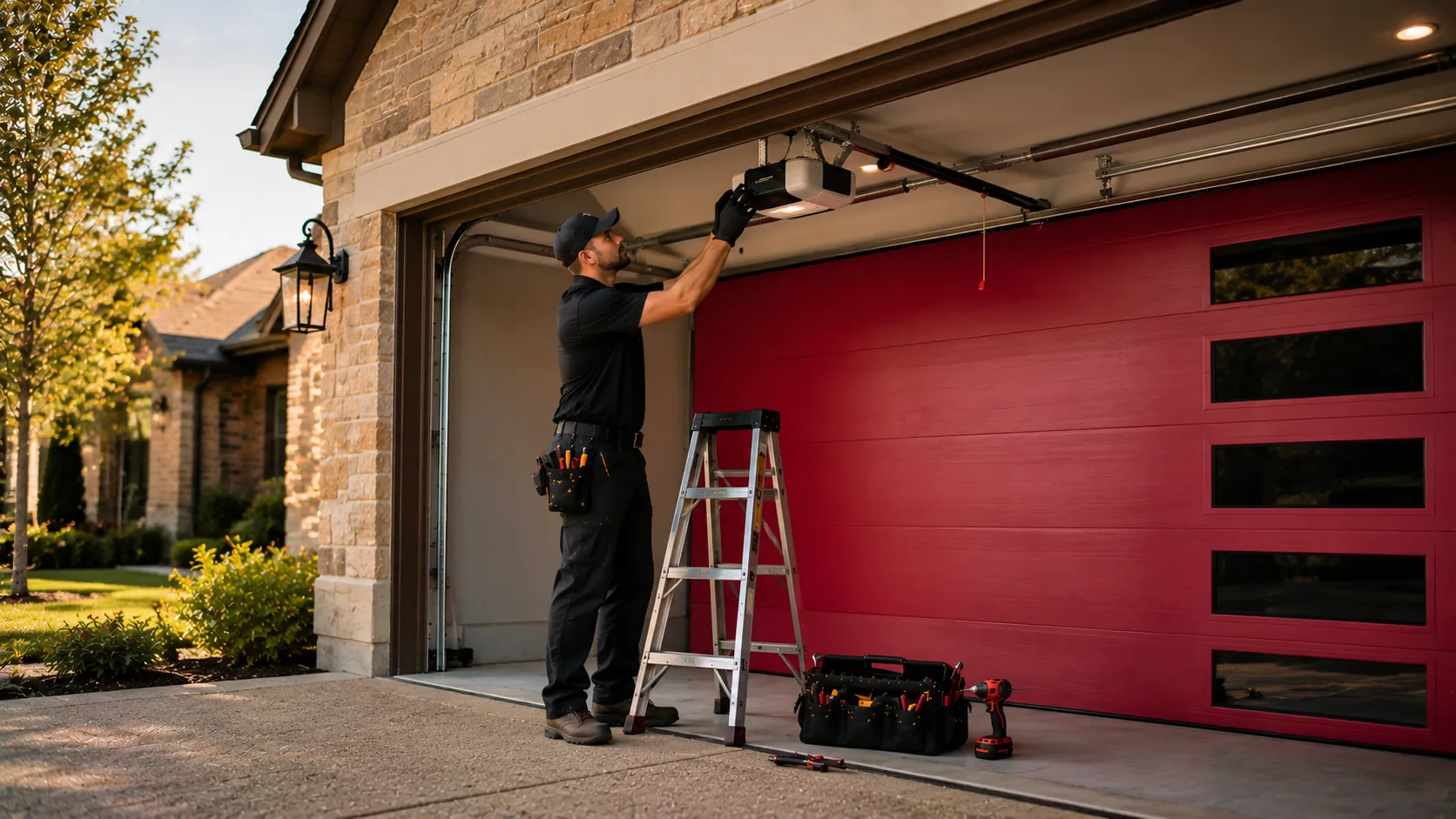
We also bring openers that work with older rail styles, since a lot of these garages had openers retrofitted decades after the door itself went in, which means the header height and door weight don't always match what a modern opener kit assumes out of the box.
What we don't load for every call is a full replacement door - if your original one-piece door has failed structurally rather than mechanically, that's usually a scheduled swap, not a truck-stock repair, because sizing an old opening correctly takes a measurement visit first.
Local causes
The failure pattern in Westville tracks the build year. A door and its hardware installed around 1954 has had seventy years to work loose, rust, or simply outlast the metallurgy of its era. Springs lose tension gradually and then fail suddenly. Steel track that was fine for a lighter, older door sags under a heavier insulated replacement panel bolted onto the same rollers.
The area sits in a cold-moderate climate band, which means these houses see real freeze-thaw cycling every winter. On original hardware that's already fatigued, that cycling is what turns a stiff door into a stuck one - metal contracts, alignment shifts a fraction, and a track that was borderline in October binds hard in January.
Westville's household income runs lower than the wider Danville service area's $56,781 median, and that shapes the decision we see most often on these calls: repair the existing spring and track rather than replace the whole door, as long as the panel itself is sound. We'd rather fix what's fixable than push a full replacement where a $50,000-income household doesn't need one.
Watch-outs
On a door this old, the most common call is a broken torsion spring - the cable goes slack, the door won't lift, and if someone's forced it by hand the drum can bind on the shaft. Second most common is a cable that's frayed through at the drum from decades of the same wrap point taking the load.
Less obvious but just as real: track that's pulled away from the framing because the lag screws were driven into original 1950s lumber that's since dried and shrunk. That's a structural fix, not a hardware swap, and it takes longer than a spring replacement.
What we won't do is tell you a repair will hold if the door panel itself is rusted through at the bottom or the opener motor has burned out - at that point you're paying twice, once for the patch and again for the replacement six months later. We'll say so on the spot rather than let you find out the hard way.
Questions
Most houses in Westville were built around 1954, when one-piece tilt-up doors on side-mounted hardware were standard. Even where the door itself has been replaced since, the original framing and track gauge often stayed, which means parts sized for today's sectional doors don't always fit without adjustment.
We run out of Danville, about 7 miles away. There's no local branch in Westville, so the truck comes from Danville stocked for the hardware common to this area's older housing stock.
If the panel and track are structurally sound, repairing the spring is almost always the cheaper, faster call. We only recommend full replacement when the door itself has failed - rusted through, warped, or track pulled loose from rotted framing.
Yes. The area sits in a cold-moderate climate band with real freeze-thaw cycling each winter. On hardware that's already decades old, that seasonal contraction is often what pushes a stiff, slow door into one that binds or fails outright.
Explore more
Ready when you are
Danville Garage Door Pros repairs and installs garage doors, springs and openers in Danville, IL and the surrounding area.