
Guide
Is Your Danville Garage Door Worth Fixing or Time to Replace It
Danville homes mostly date 1938-1973. Here's how to tell if your original garage door and hardware are worth repairing or ready for replacement.
The Problem
Most of the houses across Danville's older neighborhoods went up between 1938 and 1973, with the median build year sitting around 1957. That means a lot of garage doors and openers in this town are original equipment, or close to it, running on hardware nobody stocks new anymore - narrow steel track, side-mount torsion springs sized for doors half the weight of what's sold today, and openers with drive systems that predate modern safety reversal standards.
The question homeowners ask isn't "how do I fix this," it's "should I." A door built in 1958 was engineered for a house built in 1958. Sixty-plus years of freeze-thaw cycles, rust on fasteners, and warped wood panels change the math. Some of these doors are worth another decade of service with the right repair. Others are one more cold snap away from a spring snapping the track loose from studs that have already pulled twice.
We can't tell you which one your door is without seeing it. What we can tell you is what to check before you decide, because across the roughly 4,808 owner-occupied houses in this service area, the answer splits close to even.
What Local Conditions Do
Danville sits in a cold, moderate climate band, which means real freeze depth in the ground and real temperature swings on anything mounted outside a heated wall - like a garage door track and its springs. Steel contracts in the cold. On a door that's original to a pre-1960 build, that contraction works on fasteners and welds that have already lost some material to decades of the same cycle.
The practical effect: torsion springs on older Danville doors tend to fail in the coldest stretch of winter, not the mildest. Wood panel doors from that era, common in this housing stock, also take on moisture at the bottom panel through repeated freeze-thaw, and that panel swells, cracks, and eventually stops sealing against the floor. That's not a defect in the door - it's forty-plus winters doing what forty-plus winters do to wood and steel in this climate.
A door with a swollen bottom panel but a sound frame and track is a repair. A door where the track itself has rusted through at the mounting brackets, which we see on some of the oldest stock in town, is not - the fix would cost more than the door is worth.
Season by Season
In this climate band, the failure pattern on an older door runs on a calendar. Late fall is when you want to check spring tension and roller condition, before the first hard cold sets springs under stress they've been slowly losing over the year. A spring that's marginal in October usually breaks in January.
Winter is when broken springs and frozen or gummed-up track hardware show up most on original-era doors - the cold makes brittle metal brittle faster. If your door is original to a 1940s or 1950s build and you haven't had the springs replaced, winter is not the season to find out they're original too.
Spring is thaw season, and it's when wood panel doors reveal water damage that was hidden under ice - swelling, soft spots at the bottom rail, sections that no longer sit flush. Summer is the calmest stretch for original hardware in this climate, and it's the best time to get an honest look at a door before the next cold season, since nothing is under active stress yet. If you're deciding whether a door is worth fixing, summer is when to make that call, not February.
What to Look At First
Start with the track and the wall studs it's screwed into. On houses built before 1960, common across Danville, studs have often been drilled more than once over the decades, and a track that's loose or pulling away from wood that's lost holding strength is a bigger job than tightening screws. That's a structural check, not a repair.
Next, the springs themselves - look for gaps in the coil, rust that's flaking rather than surface-level, or a door that's noticeably heavier to lift by hand than it used to be. That's tension loss, and on original torsion hardware from this era, replacement parts sized to match are getting harder to source.
Last, the panels. A wood door with one damaged panel and a sound frame is often worth fixing. A door with rot or warp across multiple panels usually isn't - by the time you've replaced that much wood and matched the finish, you've spent close to what a new insulated door costs, and the new door will handle this area's cold better than the original ever did. We won't talk you into a repair that doesn't make sense, and we won't talk you into a replacement you don't need yet.
Questions
Common questions
How do I know if my garage door spring is original to the house?
If your house was built before 1960, which describes a large share of homes across Danville, and the spring has never been serviced, it's likely original or close to it. Original torsion springs from that era are usually undersized for door weights added since, like insulation or heavier hardware, and are past their expected working life either way.
Is it worth fixing a wood panel door instead of replacing it?
Depends on how much of it is damaged. One swollen or cracked panel on an otherwise sound frame is usually worth repairing. Rot or warp across several panels, common on doors that have gone through many freeze-thaw cycles here, usually costs more to patch than to replace with a new insulated door.
Why do older doors in this area fail more in winter?
Danville sits in a cold, moderate climate band, and steel components contract in low temperatures. On springs and track hardware that have already lost strength over decades, that seasonal contraction is often what pushes a marginal part past failure - which is why winter is the worst time to find out your hardware is original.
Recommendation
You Might Also Like
More garage door guides for Danville homeowners.
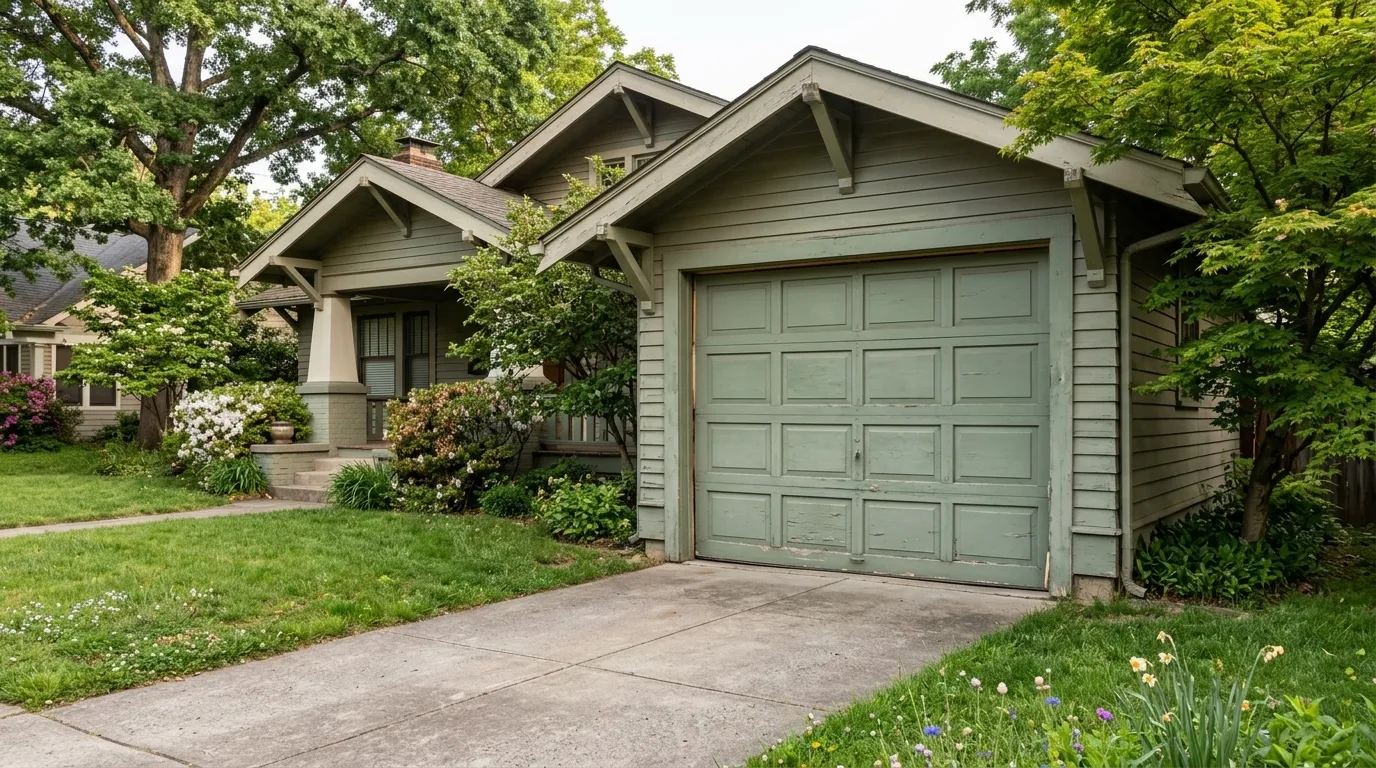
Why Danville's Older Housing Stock Fights You Every Winter
Danville homes built 1938-1973 have doors and hardware that weren't made for cold-band winters.
Read guide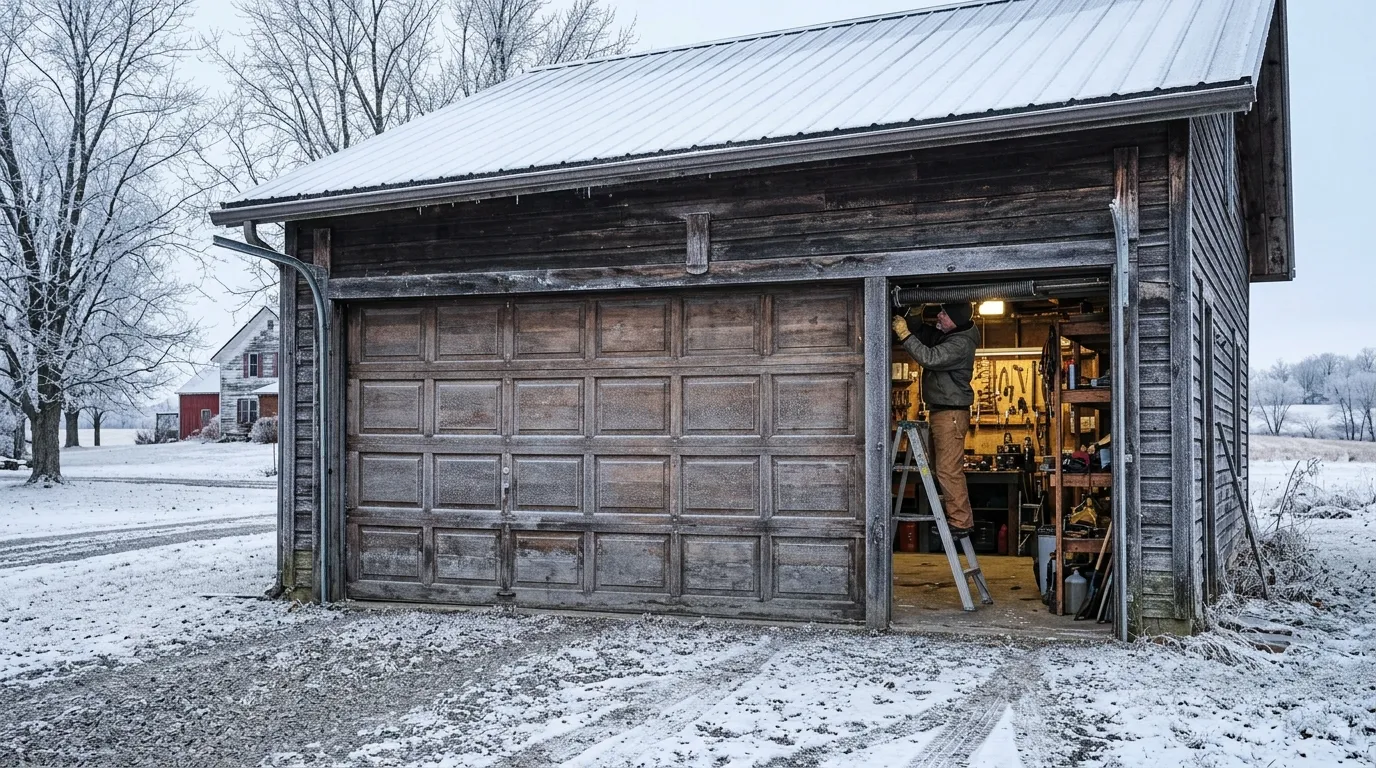
Why Garage Door Springs Snap in Danville's Cold Snaps
Danville homes built between 1938 and 1973 still run original torsion springs.
Read guide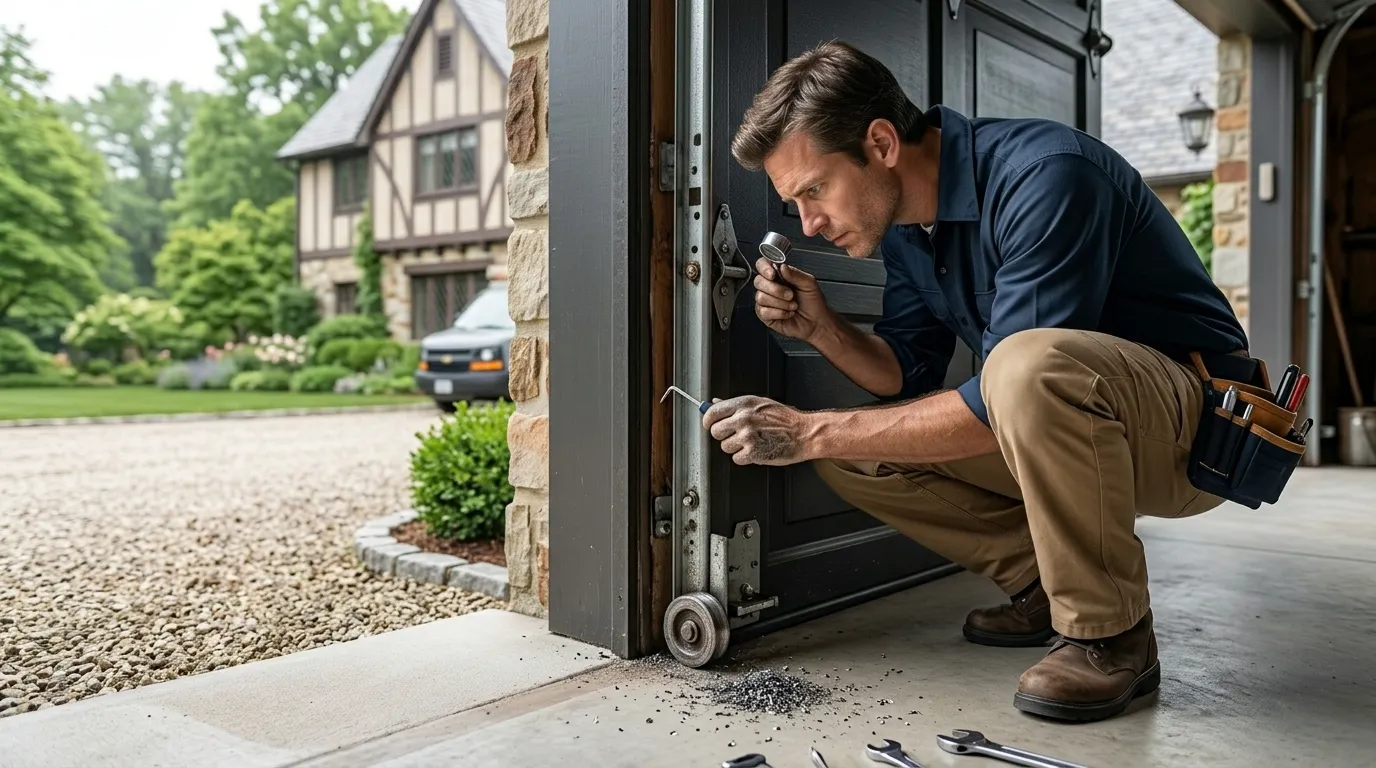
The Noises That Mean Something - And the Ones That Don't
Most Danville, IL houses went up between 1938 and 1973.
Read guideReady when you are
Need a garage door sorted in Danville?
Danville Garage Door Pros repairs and installs garage doors, springs and openers in Danville, IL and the surrounding area.