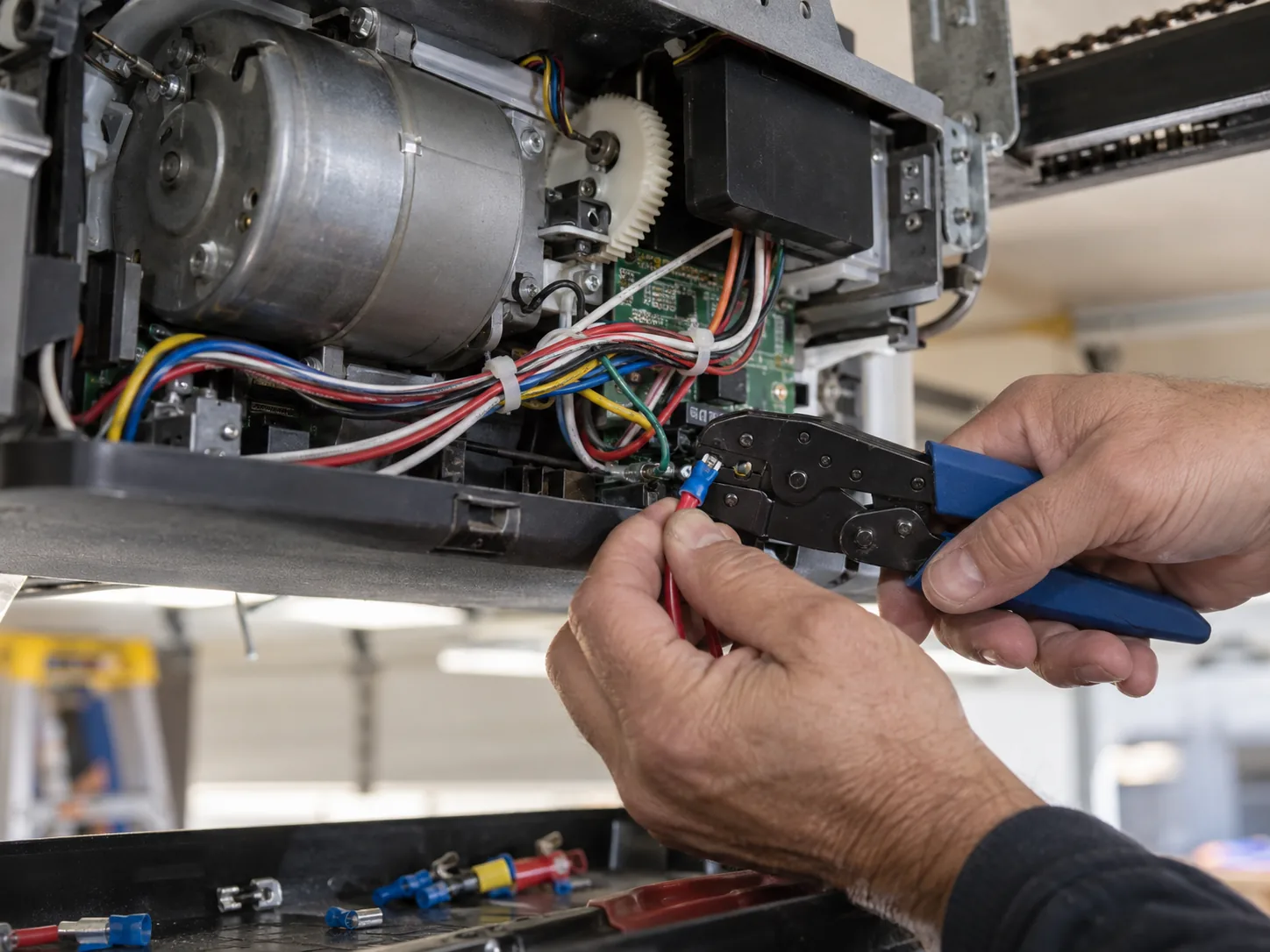
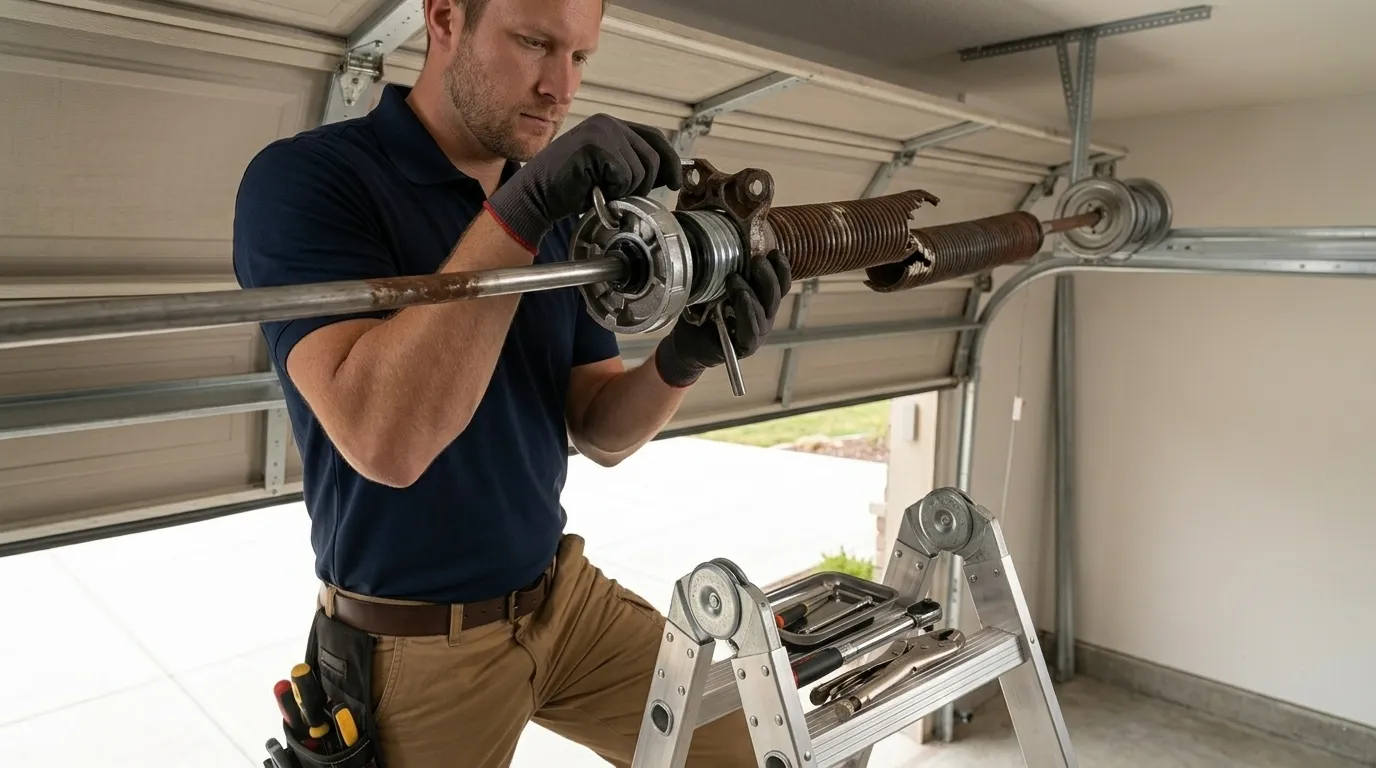
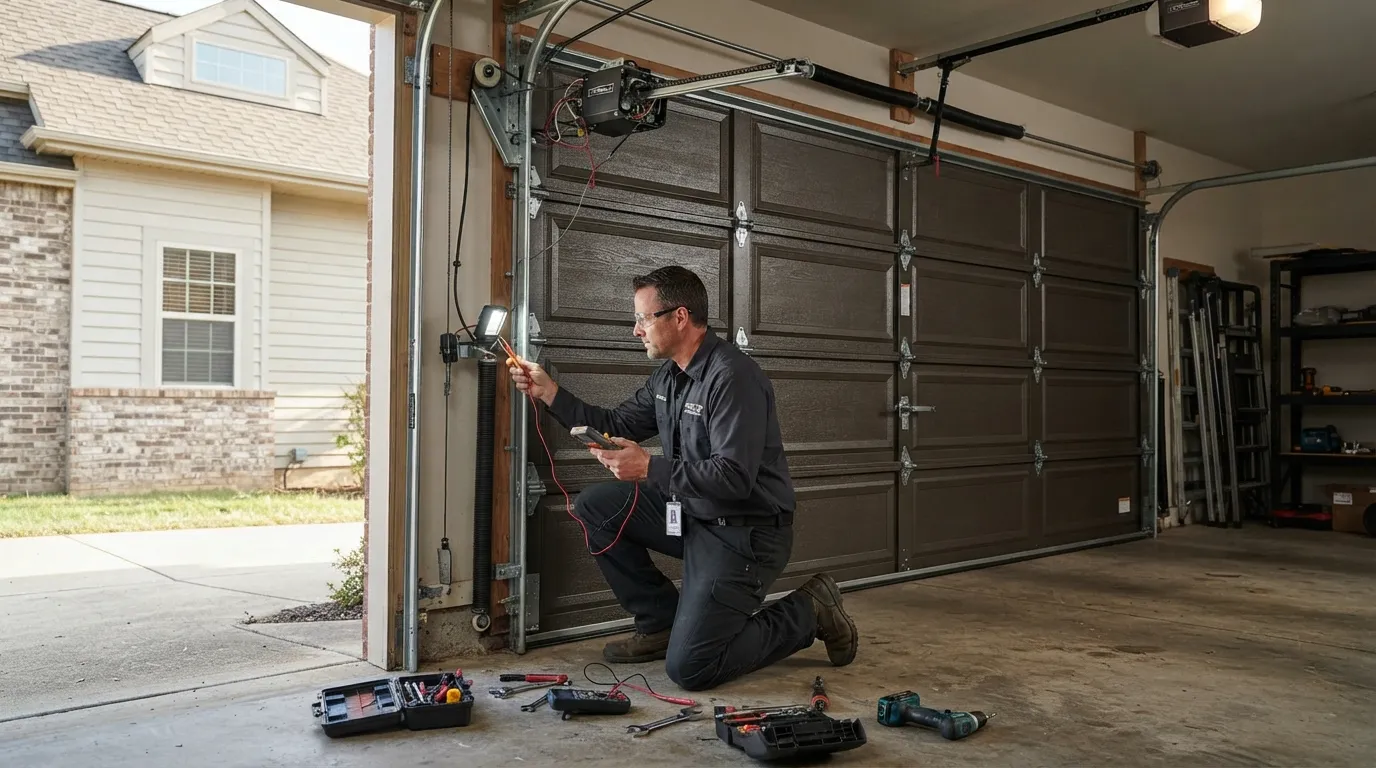
Housing across this service area was mostly built between 1938 and 1973, with a median year of 1957, and that shows up directly in opener failures. A lot of these garages still run the original torsion or extension spring setup, with an opener added decades later as an afterthought. The opener motor ends up doing extra work compensating for springs that have lost tension over sixty-plus years, and that shortens the life of the drive gear and the circuit board both.
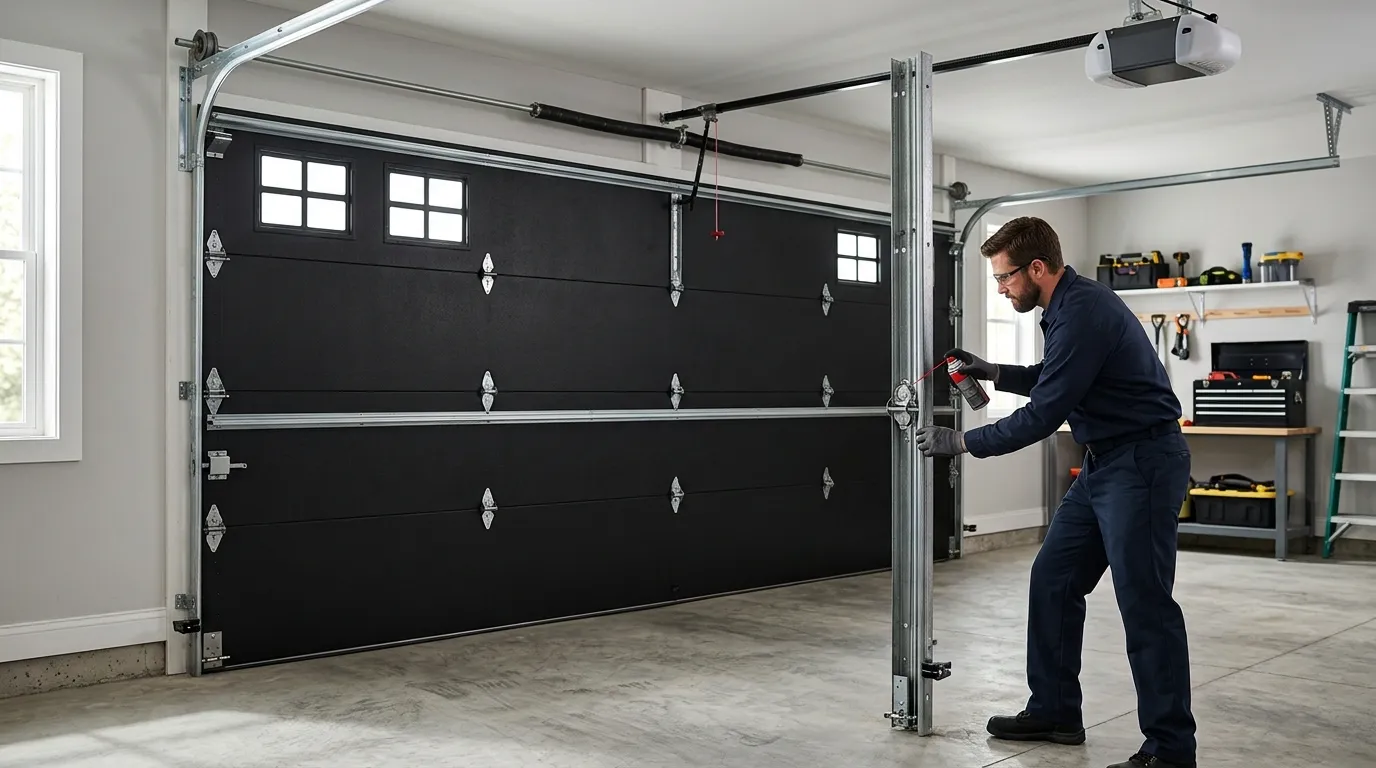
The climate compounds it. This is a cold-moderate band, and openers here go through real freeze-thaw cycles every winter. Grease in the drive gear thickens in the cold, the chain or belt tightens as metal contracts, and the motor draws harder to force a door that's stiffer than it was in October. That's why openers that run fine all summer start grinding, hesitating, or tripping their own safety reversal starting around the first hard freeze.
Across the 11 named areas this company covers, the pattern repeats: older houses, aftermarket openers bolted onto original hardware, and a climate that stresses the weakest link every winter. It's not that Danville openers are built worse. It's that they're carrying more load than a newer install would.