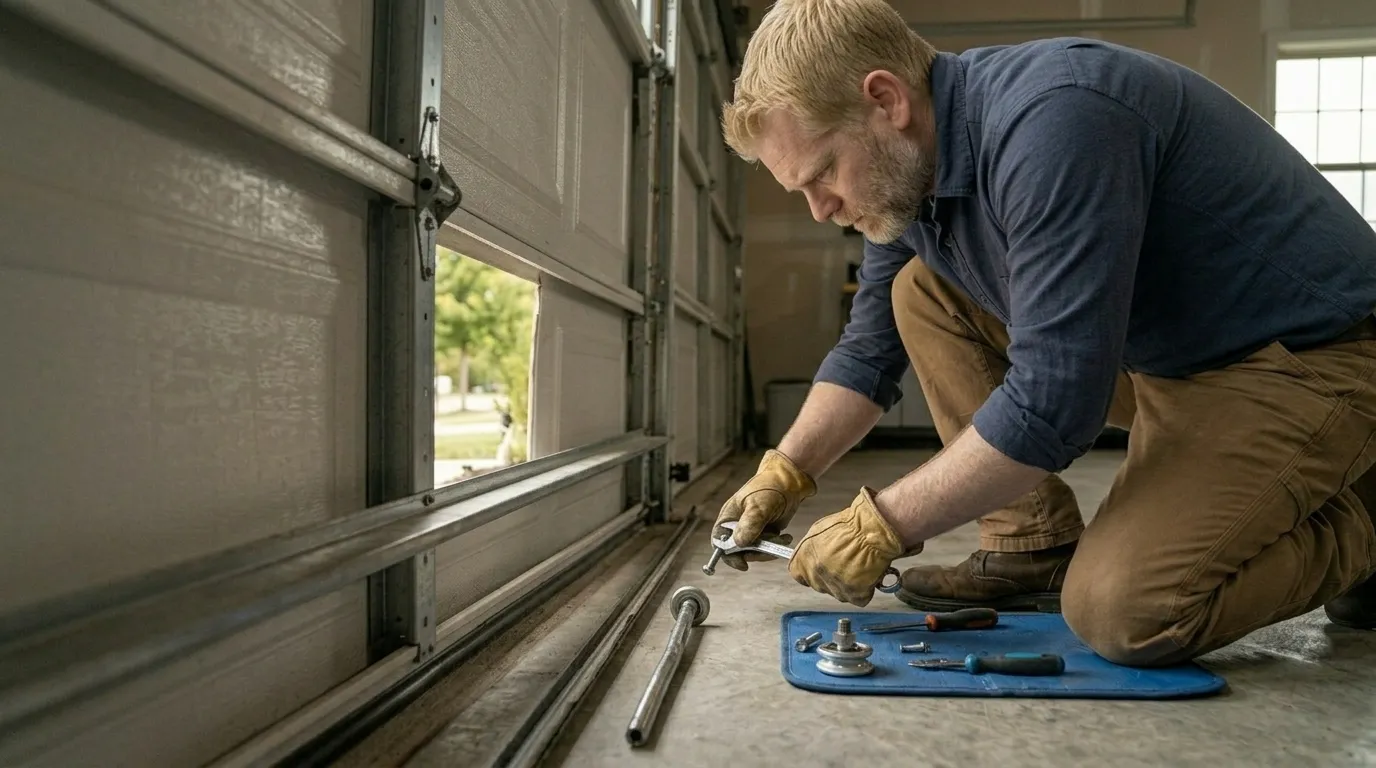
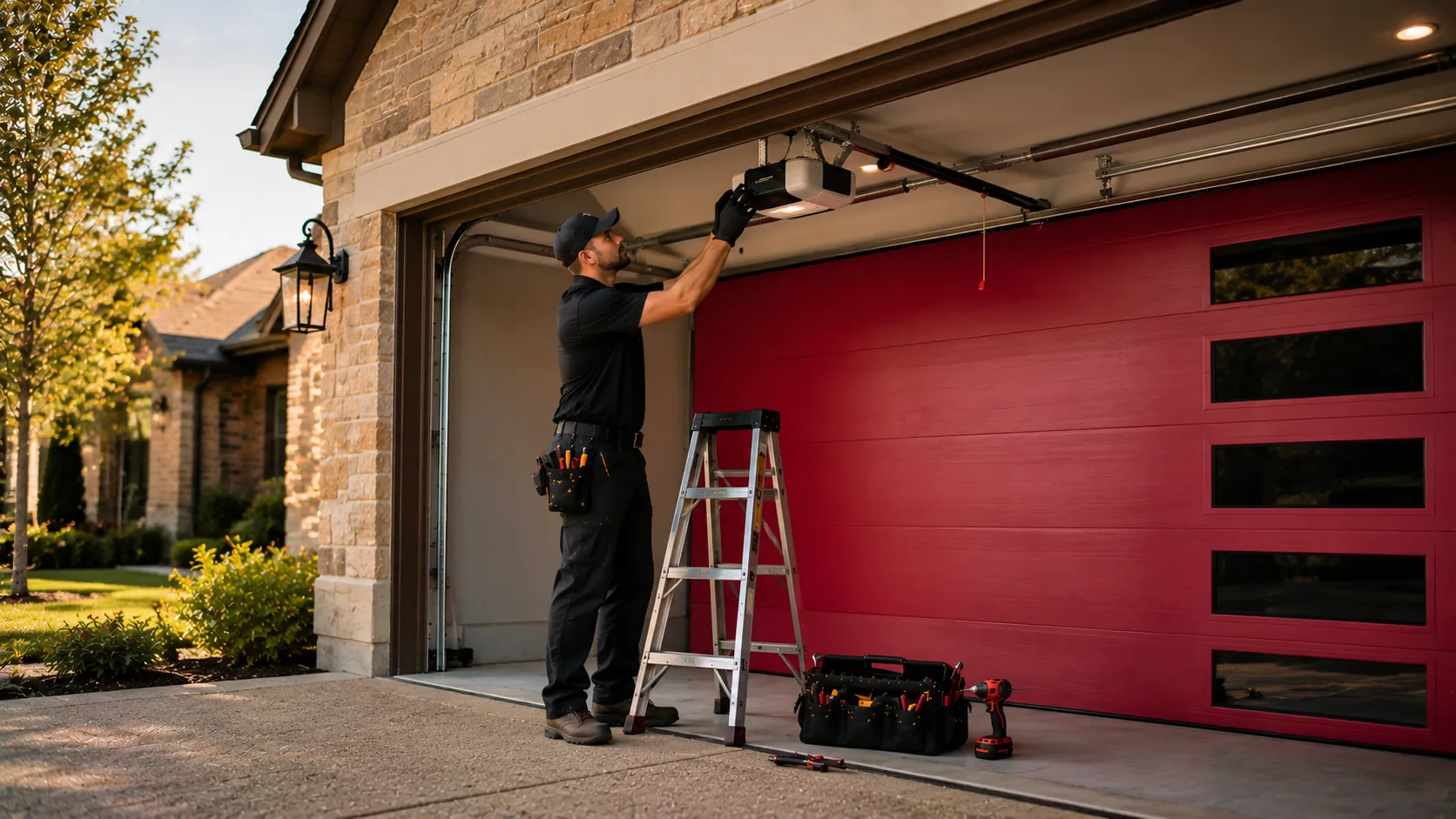
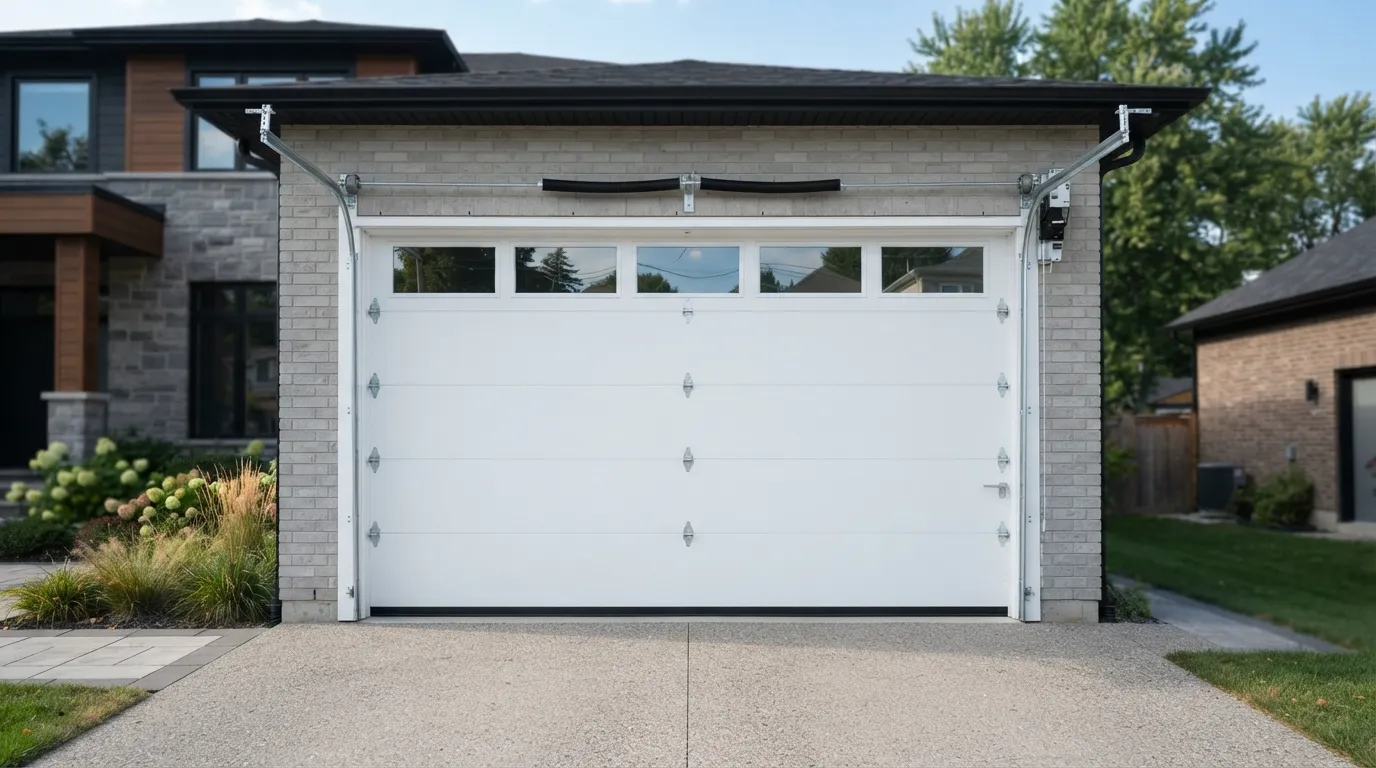
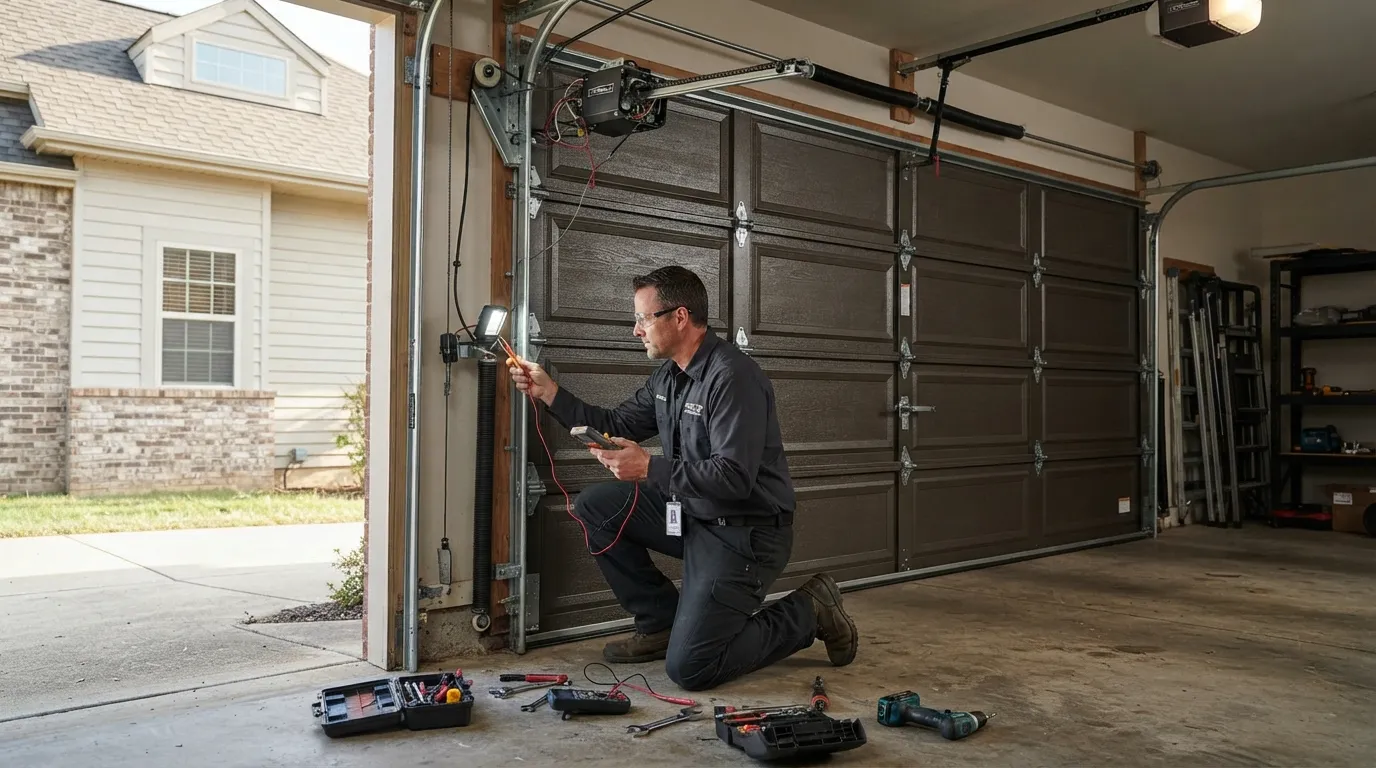
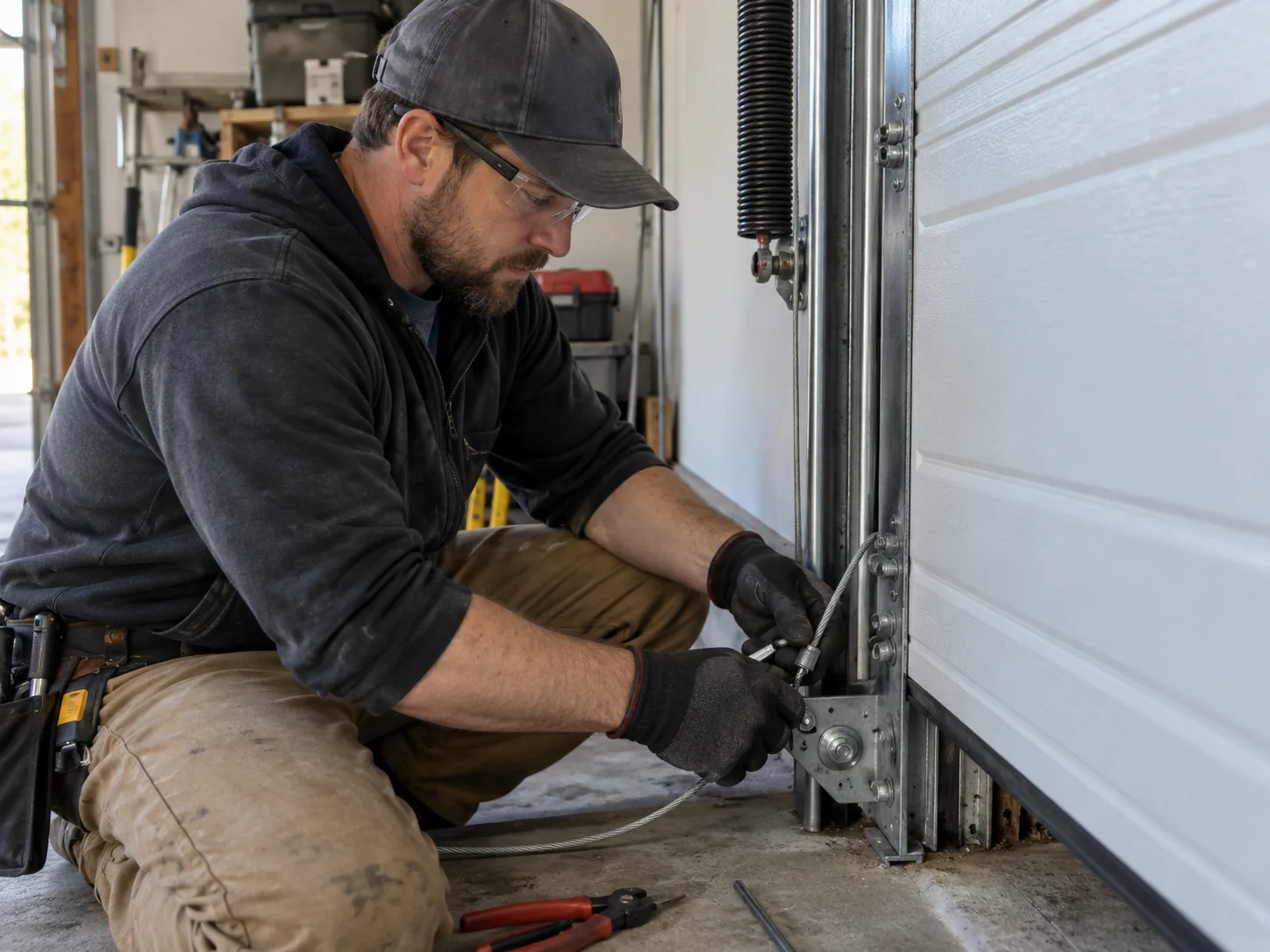
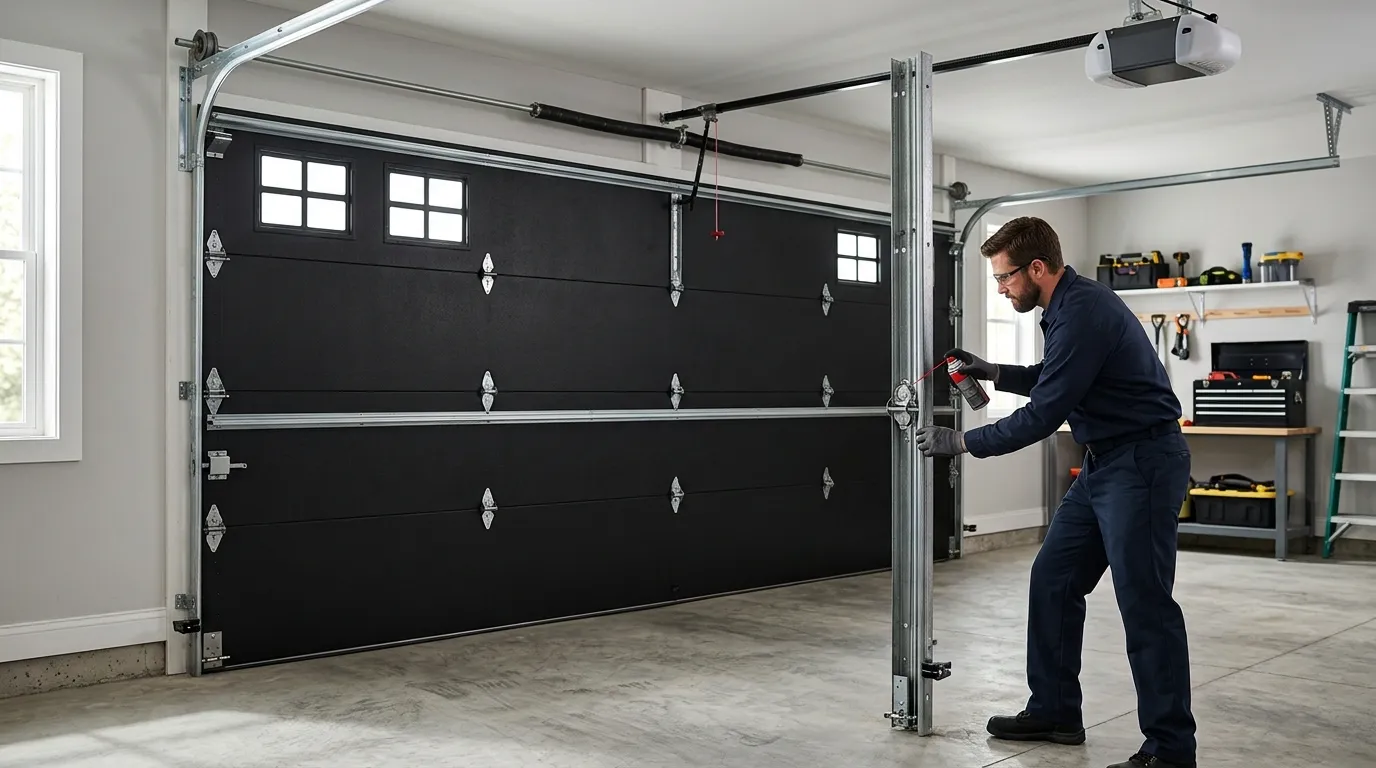
Most of the houses we get called to were built between 1938 and 1973, with the bulk of that stock going up around 1957. Doors and openers from that era, and a lot of the replacement doors installed since, sit on steel or galvanized tracks that were never upgraded when the rollers were swapped for cheaper stock over the years. That mismatch is where roller wear starts.
Danville sits in a moderate-cold climate band, which means real freeze-thaw cycling every winter. Steel rollers on older track pick up condensation, rust at the stem, and start grinding instead of rolling. Nylon rollers on the same houses harden and crack in the cold, especially if the track has even a slight bow - and on a house built before 1960, a slightly bowed track from six decades of settling is normal, not rare.
Across the eleven areas we cover, pre-1960 construction is the rule rather than the exception, so this isn't a one-off complaint - it's the most common reason a door starts sounding rough here before anything else fails. Newer builds in the service area see it too, but far less often, because their track hardware is dimensioned for the roller sizes sold today.