
Guide
Why Danville's Older Housing Stock Fights You Every Winter
Danville homes built 1938-1973 have doors and hardware that weren't made for cold-band winters. Here's what that housing stock means for your garage door.
The Problem
Most of the houses we get called to in Danville and the eleven areas around it - Tilton, Westville, Catlin, Bismarck, Oakwood, Georgetown, Fithian, Potomac, Rossville, Ridge Farm, Sidell - went up between 1938 and 1973, with the typical build year sitting around 1957. That matters more than people think. Doors on houses built before insulation rules were common weren't designed with a thermal break, and the openers and track hardware from that era, or the replacements installed to match old rough openings, don't always play well with a cold climate. A door built for a house with no wall insulation to speak of doesn't care about R-value, but the wood jambs and the original masonry openings behind it shift with frost, and that's where the real trouble starts - a track that was plumb in July and binding by January. We see this on nearly every call in the pre-1960 stock across this service area, not as a one-off but as the baseline condition of the door.
The honest limitation here: if your opener is original to a 1957 house, we're not going to pretend a tune-up fixes decades of drift in a masonry opening. Sometimes the fix is the door and track together, not a part.
What Local Conditions Do
This area sits in a cold, moderate climate band, which means real freeze-thaw cycling every winter rather than one hard freeze and done. On a house from the 1938-1973 range, that cycling works on two things at once: the original wood door jamb, which swells and shrinks with moisture, and the track fasteners anchored into openings that were framed to a different standard than what goes up today. Add a driveway with any slope or a slab that's settled over sixty-plus years, and you get a door that closes square in August and catches a corner in February.
With 4,808 owner-occupied houses in a stock this old, spread across 7,302 households, the pattern repeats itself house to house: a spring that was sized right for a lighter, uninsulated panel now straining under a heavier replacement door, or a roller track that was never leveled to account for a shifted slab. None of this is a defect in any one door. It's what this housing stock does to hardware over time in this climate, and it's why a generic seasonal tune-up written for newer construction misses the actual failure points here.
Season by Season
Fall is when you want the door checked before the first hard freeze locks in whatever's already out of alignment - a loose track bracket in October is a five-minute fix, the same bracket in January after it's iced over is a bigger job. Winter is when the cold-band freeze-thaw cycle does its worst work on original jambs and settled openings; this is when doors that were fine all year start binding on one side or refusing to seat at the bottom.
Spring brings the thaw, and with it the ground moving back the other direction - openings that tightened in the cold now loosen, and a door that was catching in February might close too loose by April, which is its own problem for weatherstripping and seal. Summer is the calm stretch, and it's the right time to deal with anything that's been limping along, because parts lead times run longer once the cold sets back in and everyone's calling at once. We can't promise a same-week fix in January that we could do in June - that's just the reality of the season here.
What to Look At First
Given the age of the housing stock here, start with the track brackets and the jamb, not the opener. On a house from this era the opener is often the newest thing on the door - it's the wood and the masonry around it that have moved. Check whether the door seats evenly on both sides of the floor; a gap on one side and not the other usually means the opening itself has shifted, not that the door is out of adjustment.
Next, look at the spring. Original torsion or extension springs on doors this old are frequently mismatched to a heavier replacement panel installed at some point since, and in a cold climate a spring under the wrong tension fails faster, not slower. Last, check the weatherstrip at the bottom - with median household income in this area at $56,781, most owners we talk to want the door working through another winter before they replace it outright, and a fresh seal is the cheapest way to buy that time. If the track and opening are sound, that's usually enough. If the opening itself has shifted, no amount of adjustment on the door fixes it.
Questions
Common questions
Why does my garage door only stick in the winter?
In this climate band, freeze-thaw cycling moves the ground and the door opening itself, not just the door. On houses built in the 1938-1973 range common around Danville, that shift is more pronounced because the original openings were framed to older standards. The door isn't failing - the opening around it is moving seasonally, which is why the same door can work fine again by spring.
Is it worth repairing an original door from a 1950s house?
Depends on what's wrong. If it's the spring, track, or weatherstrip, repair usually makes sense. If the jamb or opening itself has shifted enough that the door won't seat square no matter how it's adjusted, replacement is often the better call. We'll tell you which one you're looking at rather than guessing.
How far out do you go from Danville?
We cover Danville and the surrounding areas including Tilton, Westville, Catlin, Bismarck, Oakwood, Georgetown, Fithian, Potomac, Rossville, Ridge Farm, and Sidell.
Recommendation
You Might Also Like
More garage door guides for Danville homeowners.
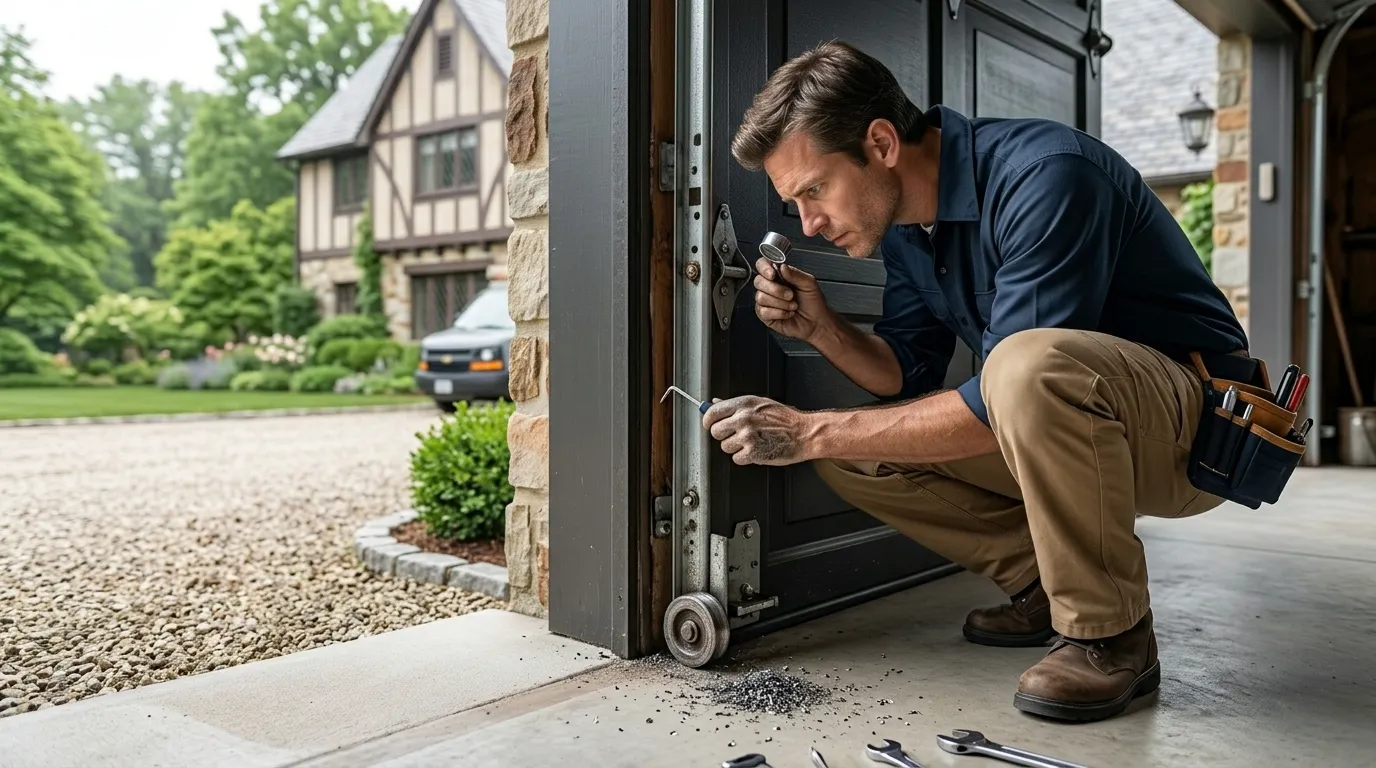
The Noises That Mean Something - And the Ones That Don't
Most Danville, IL houses went up between 1938 and 1973.
Read guide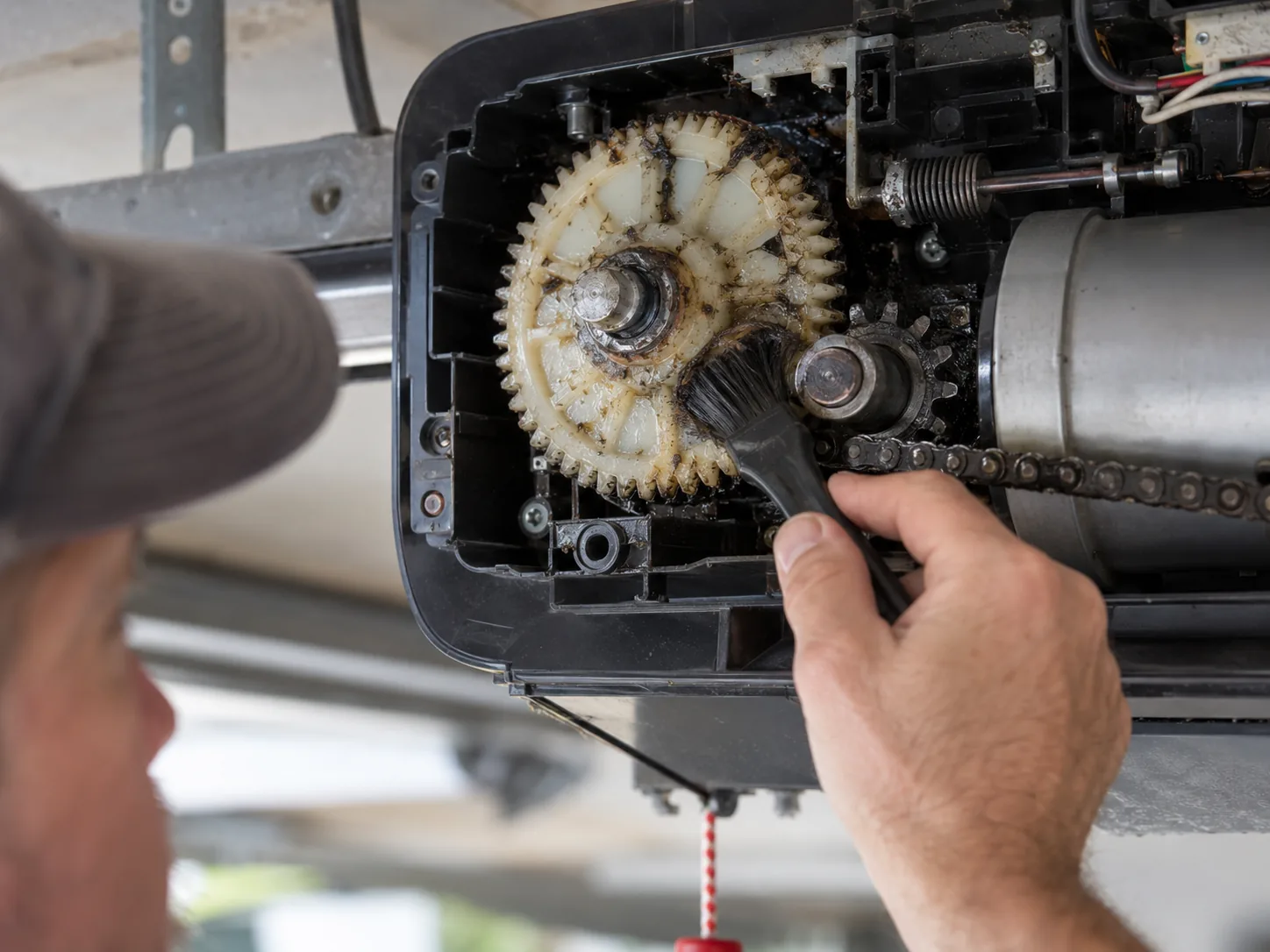
Why Openers and Power Cuts Are a Bigger Problem in Older Danville Homes
Openers and power cuts hit Danville homes built 1938-1973 hard, especially with cold winters.
Read guide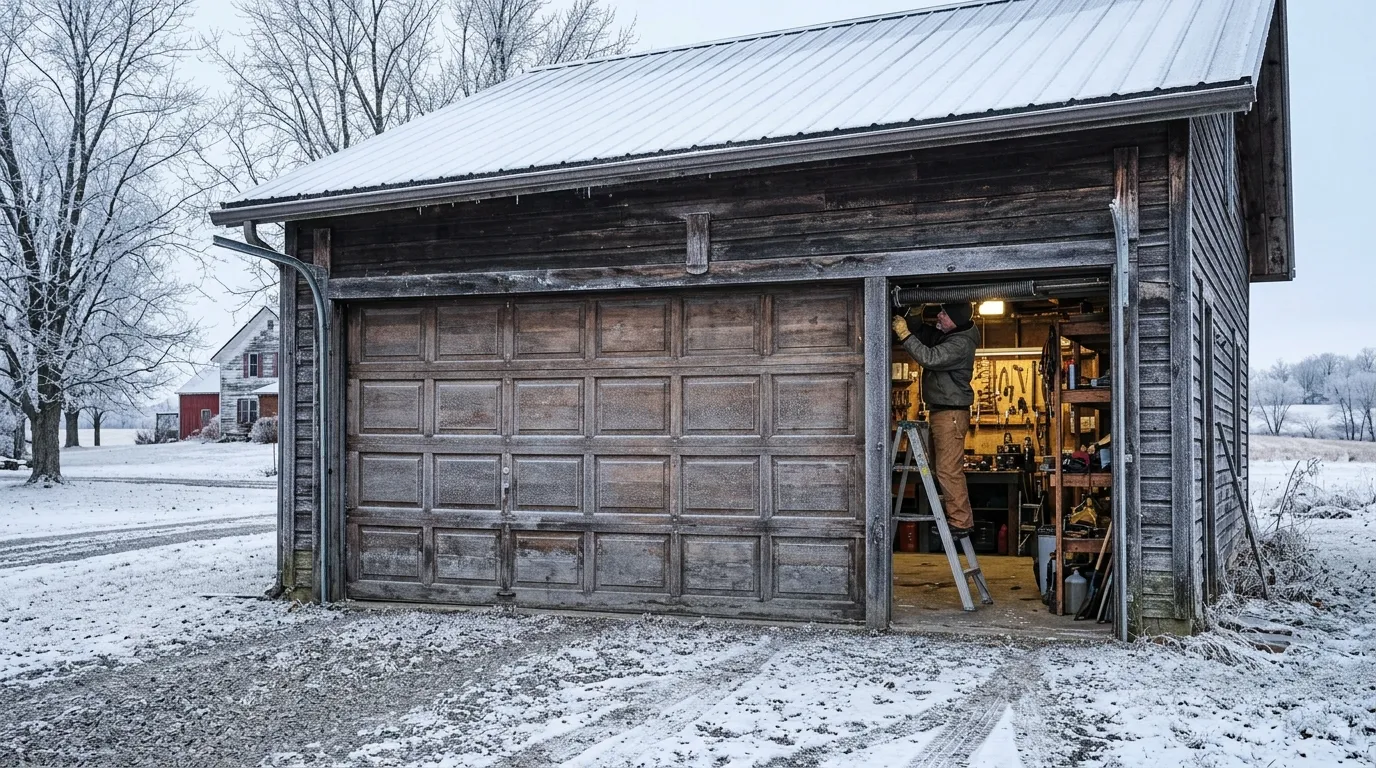
Why Garage Door Springs Snap in Danville's Cold Snaps
Danville homes built between 1938 and 1973 still run original torsion springs.
Read guideReady when you are
Need a garage door sorted in Danville?
Danville Garage Door Pros repairs and installs garage doors, springs and openers in Danville, IL and the surrounding area.